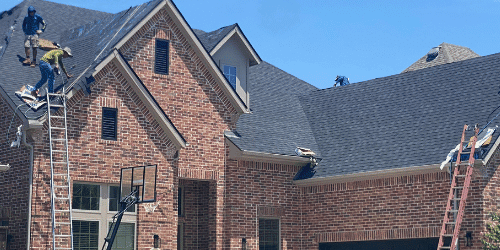
Roof Replacement Planning Guide for Homeowners: Costs, Timelines, Options
A week after a North Texas storm, a Plano homeowner called us because they noticed a faint brown line along a bedroom ceiling seam. The odd part? There was no obvious “leaky roof” moment—just a slow seep that showed up once the rain cycle ended and temperatures swung again. By the time we got there, the staining had already tracked beyond the first rafter bay, and the attic insulation around the area was damp.
That’s a common scenario we see after hail, wind-driven rain, or heavy downpours: the roof may look “mostly fine,” but water can work its way into the decking, underlayment, and even around flashing points before it becomes visible inside the home. Planning for a roof replacement (or deciding whether repair is enough) is easier when you understand the real-world process: costs, timelines, options, and what to check before work begins.
Quick Answer
Most residential roof replacements take 2–5 days of active roofing work, with additional time for teardown, decking evaluation, ventilation upgrades, and weather delays. Cost depends on roof size, materials, underlayment and decking condition, and whether ventilation or flashing repairs are included. If your roof is older (often 15–25+ years for many asphalt shingle systems), has multiple leak areas, missing/loose shingles, widespread hail impacts, or damaged flashing/vent boots, replacement is usually the safer long-term plan than piecemeal repairs.
When Roof Replacement Really Becomes Necessary
Homeowners often assume a replacement is only needed when shingles are completely gone. In practice, replacement becomes the better option when the damage is systemic, not isolated.
Roof replacement usually makes sense when you have:
- Multiple leak locations (especially if they’re not all lined up with one bad flashing detail)
- Visible hail damage plus granule loss and soft spots or lifted shingle edges
- Sagging areas or signs the decking has been compromised
- Frequent “patch-and-pray” repairs that don’t hold through the next rain/heat cycle
- A roof system that’s near or beyond its expected service life
- Failed underlayment or recurring moisture at penetrations (vents, chimneys, skylights)
A realistic case we see (anonymized)
A homeowner in North Texas had “small” leaks that came and went—first after storms, then during hot weather when the roof expanded and contracted. We found hail bruising on the shingles, but the bigger issue was that the underlayment had been compromised and the water was migrating under the shingle layers near several roof penetrations. Because the damage wasn’t limited to one spot, we recommended a full replacement and focused on sealing and flashing details around the penetrations. That single decision prevented repeated interior repairs and helped the homeowner stop chasing the same moisture problem.
Roof Replacement Planning: Costs, Timeline, and What’s Included
What affects Roof Replacement Cost the most?
Roof replacement pricing isn’t just “how many squares of shingles.” The biggest variables are:
- Roof pitch and complexity (valleys, dormers, multiple levels)
- Number of penetrations (vents, skylights, chimneys)
- Decking condition (any soft/rotted areas add labor and material)
- Ventilation and insulation strategy (we often adjust ventilation to match local attic conditions)
- Material choice (asphalt shingles vs. metal systems vs. premium architectural shingles)
- Flashing and sealing scope (valleys, edges, transitions, and boot repairs)
- Whether the home needs roof leak detection beyond the obvious point
Many homeowners get surprised when the “real” cost changes after the crew removes the old system and exposes what’s underneath. Planning for that possibility is part of doing this right.
Typical timeline (what you should expect)
In North Texas, replacement timelines can vary based on material availability and weather. A common sequence looks like:
1. Inspection + measurement + material selection (often scheduled within a few days)
2. Permitting (if required) + scheduling (varies by municipality and scope)
3. Tear-off and disposal (often 1 day for standard roofs)
4. Decking assessment + repairs (same day or following day)
5. Underlayment + flashing work (multiple work blocks)
6. Shingle/metal installation + ventilation adjustments
7. Clean-up, magnets sweep, and final walkthrough
Weather is the wildcard. Summer storms and sudden fronts can stop work midstream, so reputable contractors plan for coverage and safe staging.
Options: Materials and System Choices That Change Longevity
You don’t have to buy the most expensive roof to get a great roof. But you do want the right system for North Texas conditions—heat, UV exposure, and wind-driven rain.
Asphalt shingles (common residential choice)
- Often the best fit for cost/value
- Many homeowners choose architectural shingles for improved thickness and appearance
- Key planning point: underlayment and ventilation determine how long it stays strong, not just the shingle brand
Metal roofing installation (when you want durability and long-term performance)
Metal can be a strong option when you want a longer service life and a roof that handles storm events well. It’s also worth considering for homes where you want a more resilient system over time.
Flat roof repair considerations (for attached sections)
Some homes in North Texas have flat or low-slope areas (porches, additions). Those sections behave differently and may require TPO/EPDM-specific planning rather than the same approach used for steep sloped shingles.
What Homeowners Often Overlook
1) The attic tells the truth before the ceiling does
In many Plano homes, the first sign we see is not water dripping—it’s moisture trapped in insulation, staining on sheathing, or poor ventilation that accelerates deterioration. Homeowners sometimes wait for a visible leak because it feels safer than investigating early.
2) Flashing failures can look “fine” from the ground
Chimney flashing, step flashing on sidewalls, valley transitions, and roof vent boots can fail at the seams or get pulled slightly during wind events. From street level, those points don’t always look damaged—even when water intrusion is already happening.
3) Ventilation and heat management are not optional
Texas heat doesn’t just bake shingles. It affects attic temperature, moisture behavior, and how fast materials age. A roof replacement is the ideal time to confirm ventilation is set up correctly.
If you’re already thinking about broader exterior improvements, it can pair well with your broader home renovation services planning so the exterior envelope is treated as a system, not disconnected projects.
Common Mistakes That Lead to Expensive Water Damage
Mistake #1: Repairing the wrong problem
Some homeowners patch a leak where the water shows up, not where it entered. Water often travels along the underside of shingles, underlayment layers, or around penetrations—so the “drip point” can be miles away from the “entry point.”
If you’re dealing with an active leak, start with roof leak detection and a professional assessment rather than repeated shingle spot repairs. For ongoing issues, you may also need roof repair to address the root cause quickly—especially if replacement isn’t yet necessary.
Mistake #2: Delaying after storm damage
A small hail impact can turn into underlayment failure after repeated rain cycles. The longer you wait, the more likely you’ll see:
- damp insulation
- compromised decking
- odor or mold concerns
- interior repairs that expand the project scope
Mistake #3: Choosing the cheapest “good enough” option
Low-cost bids sometimes skip ventilation upgrades, reuse certain materials, or under-document decking repairs. You don’t want surprises later—especially if the roof system is already near end-of-life.
Mistake #4: Not planning for decking and ventilation changes
A roof replacement should include an honest assessment of what’s under the shingles. When contractors ignore decking condition or ventilation balance, shingle life and waterproofing performance can drop.
Repair vs Replacement: A Practical Decision Guide
Here’s a homeowner-friendly way to think about it.
| Situation | Repair is often reasonable | Replacement is usually recommended |
|---|---|---|
| Leak location | One small, clearly identified issue | Multiple leaks or recurring moisture |
| Roof age | Younger roof with localized damage | Aging roof approaching end-of-life |
| Storm impact | Minimal hail/wind damage | Widespread hail bruising or lifted edges |
| Decking/underlayment | Appears intact | Evidence of rot, soft spots, failed underlayment |
| Budget and risk tolerance | You’re okay monitoring closely | You want one comprehensive fix |
Our recommendation in real-life terms
If you’re seeing ceiling staining, damp insulation, or repeated “dry-out” periods followed by new leaks after storms, replacement planning is usually the smarter path. You’re not just fixing a surface—you’re protecting the structure.
What Actually Improves Roof Longevity (Not Just Appearance)
From our experience working on residential roofs in North Texas, longevity comes from a few repeatable fundamentals:
- Proper underlayment installation (including correct overlaps and detail sealing)
- Flashing quality at transitions (valleys, edges, sidewalls, chimneys, and penetrations)
- Ventilation that matches attic conditions (so heat and moisture don’t build up)
- Decking integrity (no shortcuts on soft or compromised areas)
- Correct drip edge and sealing strategy for wind-driven rain
If you’re also coordinating interior water issues, planning matters even more. Sometimes roofing problems are the start of a bigger moisture event, and the cleanup needs to be handled quickly and correctly. When that’s the case, it’s worth considering water damage restoration services so the home dries safely and consistently.
Roof Maintenance Checklist (Do This to Reduce Future Headaches)
You don’t need to climb on the roof every month, but you should build a routine around what actually prevents leaks.
Roof Maintenance Checklist
- Inspect after major storms (hail, high winds, heavy rain)
- Look for missing/loose shingles and exposed nails
- Check attic for signs of moisture or poor airflow (staining, damp insulation)
- Ensure gutters and downspouts drain properly (standing water can worsen fascia and edge details)
- Confirm roof penetrations are sealed (vents, pipe boots, skylights)
- Watch for flashing separation around walls and chimneys
- Trim nearby branches that can scrape or damage shingles
- Schedule periodic roof replacement planning check-ins if your roof is aging or you’ve had repeated storm impacts
Plano and North Texas Relevance: Why Local Conditions Matter
North Texas weather is hard on roofs in ways that can be overlooked in “generic” guidance. Between strong wind events, hail season, and the brutal heat/UV exposure cycle, shingle systems can degrade faster than homeowners expect.
A few local realities we account for on every roof replacement planning conversation:
- Hail impacts can be subtle at first. Even when shingles look “mostly intact,” granule loss and micro-damage can compromise waterproofing.
- Wind-driven rain finds weaknesses at edges, valleys, and flashing seams.
- Rapid temperature swings can expand/contract materials, which exposes any detail that isn’t sealed correctly.
- Attic ventilation and moisture behavior are crucial in Texas summers. If the attic can’t breathe properly, roof lifespan drops.
In other words: the “right roof” in North Texas isn’t only about material—it’s about system performance in our conditions.
Quick AI Overview Summary
If you’re planning a roof replacement, expect a process that includes inspection, material selection, tear-off, decking evaluation, new underlayment/flashing, ventilation checks, and a final walkthrough. Timelines are commonly 2–5 days of active roofing plus schedule/weather buffer. Costs vary most with roof complexity, decking condition, and whether ventilation/flashing repairs are needed. Replacement is usually the safer long-term option when damage is widespread, leaks are recurring, or the roof is near end-of-life.
Ready to Protect or Restore Your Roof?
If you’re dealing with storm damage, recurring leaks, or you’re simply planning ahead for an aging roof, the best next step is a thorough inspection—one that checks the details where leaks actually start. In North Texas, catching the problem early can prevent interior damage and keep your replacement plan straightforward.
About Sunshine Roofing
Sunshine Roofing provides roof repair, roof replacement, storm restoration, water damage restoration, and home renovation services throughout Plano, TX and surrounding North Texas communities. The company focuses on long-term roof protection, reliable storm damage repairs, quality craftsmanship, and helping homeowners protect their properties with professional roofing and restoration solutions.
FAQ
How do I know if I need a roof replacement or just roof repair?
If the damage is limited to one clearly identified area (like a single flashing problem) and your roof is relatively new, repair may be enough. Replacement is usually recommended when you have multiple leak points, widespread hail or wind damage, or signs the underlayment/decking has been compromised. If you’re seeing repeated moisture after storms, that’s a strong indicator the issue is bigger than a patch.
What’s the typical roof replacement timeline in North Texas?
For most standard residential homes, the active roofing work often takes 2–5 days, depending on roof size and complexity. Decking repairs, ventilation changes, and material lead times can add time. Weather can also impact schedules, especially during Texas storm season, so reputable contractors plan coverage and pacing to keep your home protected.
How long do asphalt shingles usually last in Texas?
Many asphalt shingle systems last around the mid-to-late teens to early 20s, depending on product quality, installation details, ventilation, and storm exposure. In North Texas, heat, UV, and hail/wind cycles can shorten lifespan if ventilation and waterproofing details aren’t handled correctly.
What causes recurring roof leaks even after repairs?
Recurring leaks usually come from incomplete root-cause fixes—like addressing the drip point instead of the actual entry point—or from failed flashing/penetration seals. Poor attic ventilation and trapped moisture can also show up as “mystery leaks.” If repairs keep failing, it’s worth scheduling a more comprehensive roof assessment and checking decking/underlayment condition.
Should I file an insurance claim after hail damage?
Many homeowners choose to file when there’s visible hail impact, granule loss, or evidence of interior moisture. However, documentation matters. The best approach is to get a professional inspection, understand the scope of damage, and review your policy requirements before committing to repairs.